pre workout
AM Pre-Workout Meal: What to Eat Before a Morning Workout
What to eat before a morning workout. Timing windows from 5 minutes to 2 hours pre-training, the 30-second AM snack, fasted-training rules for adults and kids.
Should you eat before a morning workout?
For adults: it depends on the workout type and your goals. For short, easy cardio under 45 minutes, fasted training is a viable approach. For high-intensity work, lifting, or sessions over 60 minutes, eating something, even small, improves performance and recovery per ISSN's nutrient timing position stand[ISSN-Timing].
For children and adolescents: yes, always. AAP's Bright Futures Sports Nutrition guidance is explicit that youth athletes should not train fasted[AAP-Bright-Futures]. A small breakfast or snack is non-negotiable for kids before practice or a game, even at 7 AM.
Morning timing windows: 5 min, 30 min, 1 hour, 2 hours
| Time to workout | Best AM meal |
|---|---|
| 5-15 min (just woke up) | 8-16 oz water + 1 date or 1 slice toast with honey |
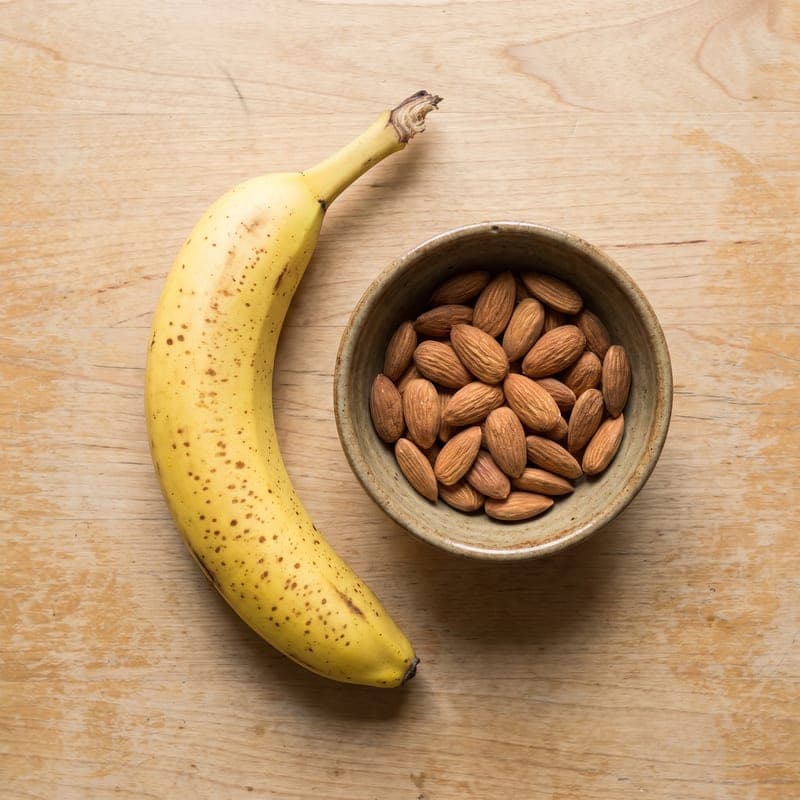
| 30 minutes | Banana + 1 tbsp nut butter, or applesauce pouch |
| 1 hour | Overnight oats, English muffin with PB, or yogurt parfait |
| 2 hours | Eggs + toast, or full bowl of oatmeal with toppings |
The 5-minute AM pre-workout (when you're rushed)
You overslept. Practice starts in 15 minutes. The right move is not skipping fuel, it's eating the most-digestible carb you have on hand:
- 1 medjool date (~17 g fast carbs)
- 1 slice white toast with honey or jam
- 1 ripe banana
- 4-6 oz orange juice or coconut water
- Applesauce pouch
Skip the protein and fat in this window. They slow digestion and can sit heavy. Hit 8-12 oz water with the carb. Save the protein for the post-workout meal.
The 30-60 minute AM meal
The most common AM window. Balance fast carbs with a small protein source:
- Banana + 1 tbsp peanut butter
- Whole-grain toast + Greek yogurt + drizzle of honey
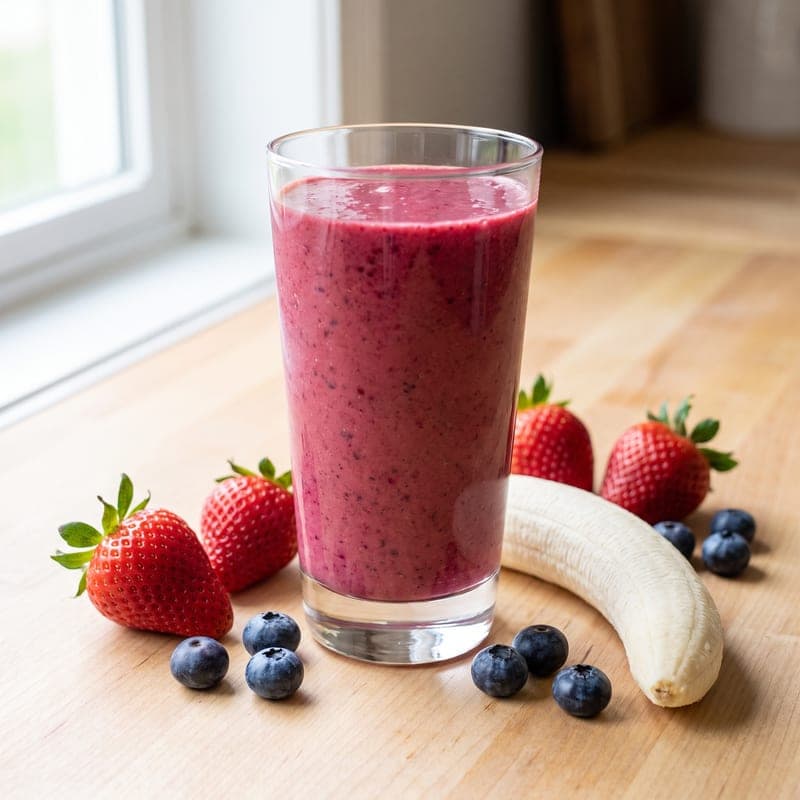
- Small smoothie: banana + milk + frozen berries + scoop of yogurt
- 1/2 bagel + 1 tbsp cream cheese + jelly
- Hard-boiled egg + 1 slice toast
The 1-2 hour AM meal
The optimal window for most morning training. Larger meal, full protein/carb pairing:
- Athlete overnight oats, make it the night before
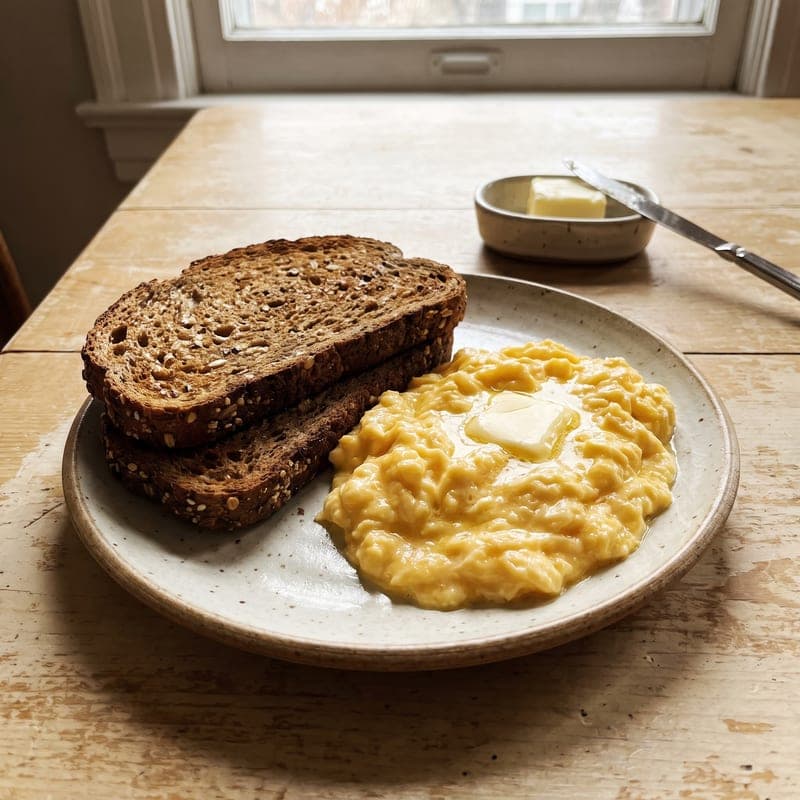
- Eggs + whole-grain toast
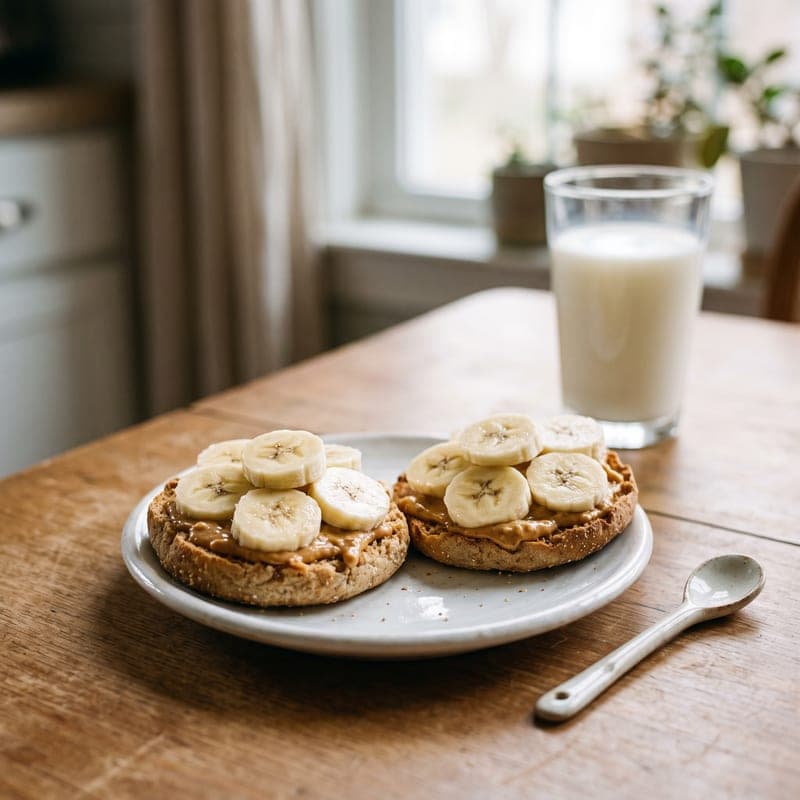
- English muffin + PB + banana
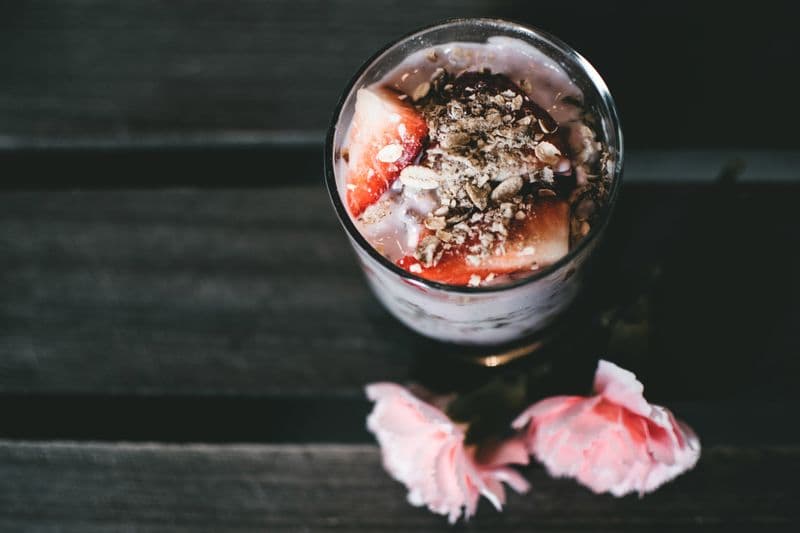
- Greek yogurt parfait with granola and berries
- Berry banana smoothie with hidden spinach
Fasted training: when it's OK, when it's not
Adult athletes can train fasted for short, low-intensity sessions, easy zone-2 cardio under 45 minutes is the textbook example. For higher intensity or longer duration, performance suffers and the workout produces less of the very stimulus you're after.
For children and adolescents, fasted training is contraindicated. The AAP's Bright Futures Sports Nutrition guidance and the Council on Sports Medicine's position on healthy weight-control practices in young athletes both reinforce that youth must fuel before activity[AAP-Bright-Futures][AAP-Promotion]. A small banana, a slice of toast, or a few ounces of milk takes 30 seconds and is the safety floor.
Coffee, caffeine, and AM pre-workout
For adults, 3-6 mg of caffeine per kg of body weight 30-60 minutes before exercise modestly improves endurance and high-intensity performance, a standard finding across ISSN literature[ISSN-Timing]. Coffee, green tea, or a caffeinated pre-workout supplement falls in this range for most adults.
For children and adolescents, the AAP clinical report on caffeinated products recommends against routine caffeine use[AAP-Sports-Nutrition]. Caffeinated pre-workout supplements specifically should not be given to anyone under 18.
AM hydration: water first, then food
Overnight dehydration is real. Most athletes wake at 1-2% body-mass deficit just from respiration and bathroom trips. NATA recommends 16-20 oz water on rising for any athlete training within 2 hours[NATA-Fluid]. Drink the water before you decide what to eat, that alone addresses much of the morning energy slump.
The FuelMyAthlete hydration tracker sets daily targets by age and body weight, with a hot-weather adjustment for summer morning practices.
Morning pre-workout for young athletes
Kids before 7 AM swim practice, soccer scrimmage, or first-period PE need a small carb-forward breakfast even if they say they're not hungry. Fasted training is not appropriate for athletes under 18 per AAP. The default options:
- Banana + 8 oz milk
- 1 slice toast with peanut butter + a glass of water
- Half a bagel with cream cheese
- Small bowl of overnight oats made the night before
- 4 oz orange juice + a granola bar
None of these takes more than 2 minutes. The investment pays off in attention, recovery, and the day-long energy that protects against the post-practice crash.
Recipes that fit
All recipes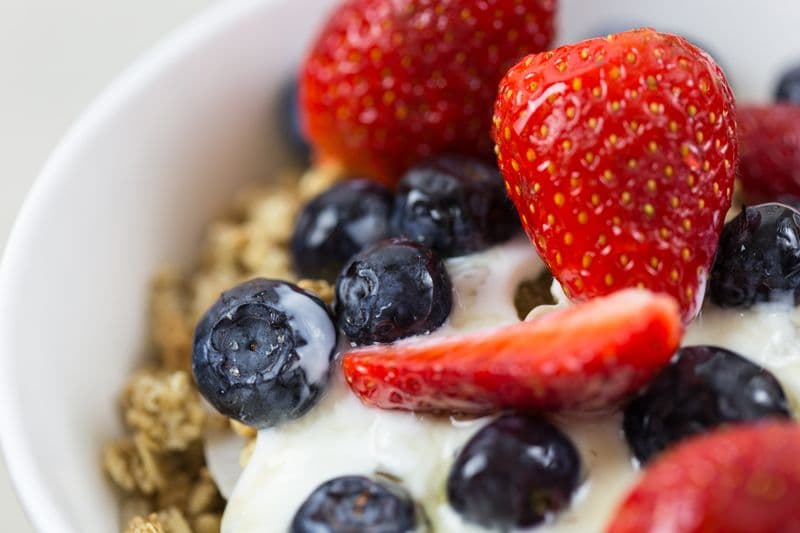
Frequently asked questions
For adult athletes, yes for anything over 45 minutes or above moderate intensity. For short easy cardio, fasted training is fine. For children and adolescents, always yes, AAP guidance is explicit that youth athletes should not train fasted.
Keep reading
What Is a Good Pre-Workout Meal? Timing, Foods, and Portions by Body Weight
A good pre-workout meal pairs complex carbs and lean protein 1-3 hours before training. Here's the timing matrix, the food list, portions by body weight, and recipes.
Read guide
Pre-Workout Meal Oatmeal: The Athlete's Guide to Timing, Portions, and Recipes
Oatmeal is one of the best pre-workout meals. Here's the timing window, the right portion by body weight, the type of oats to use, and athlete-tested recipes.
Read guide
The Best Pre-Workout Meal: 10 Athlete-Tested Options Ranked
The best pre-workout meal pairs complex carbs with lean protein in a 3:1 ratio, 1-3 hours before training. Here are the 10 best options ranked, with portions by body weight.
Read guide
Pre-Game Meal for Kids: The Complete Parent's Guide
What kids should eat before a soccer game, basketball game, or any youth sports match. Timing, portions by age, the 30-minute snack, hydration, and what to avoid.
Read guide
Sources
- [ISSN-Timing]Kerksick CM, Arent S, Schoenfeld BJ, et al.. International Society of Sports Nutrition Position Stand: Nutrient Timing. Journal of the International Society of Sports Nutrition, 2017.
- [ISSN-Protein]Jäger R, Kerksick CM, Campbell BI, et al.. International Society of Sports Nutrition Position Stand: Protein and Exercise. Journal of the International Society of Sports Nutrition, 2017.
- [ACSM-2016]Thomas DT, Erdman KA, Burke LM. American College of Sports Medicine Joint Position Statement: Nutrition and Athletic Performance. Medicine & Science in Sports & Exercise, 2016.
- [NATA-Fluid]McDermott BP, Anderson SA, Armstrong LE, et al.. National Athletic Trainers' Association Position Statement: Fluid Replacement for the Physically Active. Journal of Athletic Training, 2017.
- [AAP-Bright-Futures]American Academy of Pediatrics. Bright Futures Nutrition (3rd ed.): Sports Nutrition. AAP, 2020.
- [AAP-Promotion]American Academy of Pediatrics, Council on Sports Medicine and Fitness. Promotion of Healthy Weight-Control Practices in Young Athletes. Pediatrics, 2017.
- [AAP-Sports-Nutrition]American Academy of Pediatrics, Committee on Nutrition and Council on Sports Medicine and Fitness. Sports Drinks and Energy Drinks for Children and Adolescents: Are They Appropriate?. Pediatrics, 2011.
- [Aragon-Schoenfeld]Aragon AA, Schoenfeld BJ. Nutrient Timing Revisited: Is There a Post-Exercise Anabolic Window?. Journal of the International Society of Sports Nutrition, 2013.
FuelMyAthlete provides general guidance based on published sources from the American Academy of Pediatrics (AAP), National Athletic Trainers' Association (NATA), and American College of Sports Medicine (ACSM). This is not medical advice. For personalized sports nutrition plans, especially for children, consult a registered sports dietitian or pediatrician. See our editorial methodology.