youth nutrition
Does My Child Athlete Need Protein Powder?
Almost no young athlete needs protein powder. What a child actually needs per day, how easily food covers it, and the specific reasons paediatric bodies advise against supplements for under 18s.
How much protein a young athlete actually needs
Youth athletes need somewhere around 1.0 to 1.4 g of protein per kilogram of body weight per day, a little above the general recommendation for children because they are growing and training at the same time [AAP-Sports-Nutrition].
Put a number on it. An 11 year old weighing 40 kg, which is about 88 lb, needs roughly 40 to 56 g of protein a day. That is the whole target, not per meal.
| One ordinary thing | Protein |
|---|---|
| 1 cup milk | 8 g |
| 2 eggs | 12 g |
| 1 cup plain Greek yogurt | 20 g |
| 4 oz chicken breast | 35 g |
| 2 string cheeses | 14 g |
| 2 tbsp peanut butter | 7 g |
Eggs at breakfast, a turkey wrap at lunch and chicken at dinner is already about 60 g. The daily target is usually met by lunchtime plus dinner, which is why most young athletes are not short of protein even when their parents suspect they are.
What paediatric bodies say about supplements
The American Academy of Pediatrics has been consistent for years: performance enhancing substances and protein supplements are not recommended for children and adolescents, and the emphasis belongs on food, sleep and training[AAP-Promotion].
Two reasons matter here, and they are different from each other.
They are unnecessary. Protein powder does nothing that food does not, and the total over a day is what counts. There is no evidence that a young athlete eating enough protein gains anything from adding more.
They are not pre-tested. In the United States, dietary supplements are not approved for safety or contents before they go on sale. Independent testing has repeatedly found products whose labels do not match what is in the tub. For an adult that is a waste of money. For a 12 year old it is a different risk, and it is one you are taking on their behalf.
Why it feels like they need it
Parents almost never ask this question out of nowhere. It usually comes from one of three things, and none of them is a protein deficiency.
He is always hungry. That is usually energy, not protein. A child training four times a week and growing needs a lot of food, and hunger is the correct response to not enough of it. More calories across the day fixes this, and carbohydrate is the cheapest way to add them.
He is smaller than the other kids. Size at 12 is mostly maturation timing and genetics. Protein powder does not change either, and a late developer who is fed well and sleeps well catches up on his own schedule.
Someone at the club uses it. Which is a strong social signal and a weak nutritional one.
What to do instead
If the protein total genuinely looks low, the gap is almost always at breakfast. Cereal and milk on its own is mostly carbohydrate, and a child who eats that at 7am has taken in perhaps 8 g by mid morning.
The cheapest fixes, in order of how little effort they take: milk instead of water with breakfast, an egg alongside whatever is already being eaten, plain Greek yogurt instead of flavoured, and a string cheese in the bag. Each of those is 8 to 20 g.
Two recipes on this site exist specifically for this. The cottage cheese smoothie reaches about 26 g with no powder in it, and eggs on whole-grain toast is 18 g in eight minutes.
You will see an optional Boost it panel on the smoothie recipes here. It is marked for athletes 18 and over, deliberately, and it is there because adults read this site too.
When a supplement might be reasonable
There are real cases, and they are medical rather than athletic. A child on a restricted diet for allergy or medical reasons, a vegan athlete whose intake is hard to cover, a period of poor appetite during illness, or a diagnosed deficiency.
All of those are conversations with a paediatrician or a registered sports dietitian who can see the actual child, not decisions to make from a website. That includes this one.
Recipes that fit
All recipes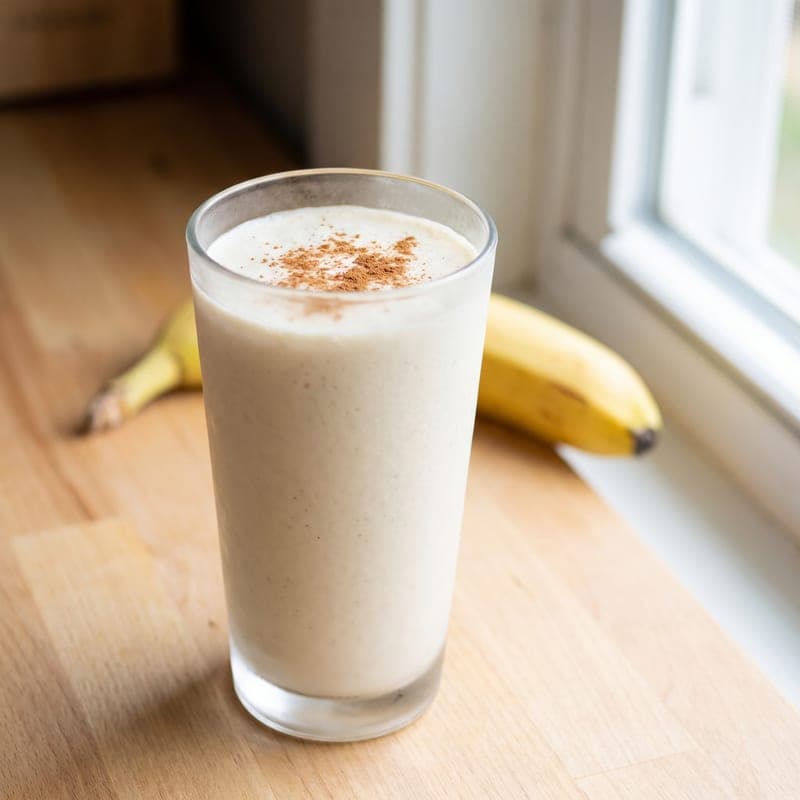


Frequently asked questions
Not inherently, and that is not really the argument. The concerns are that it is unnecessary when food already covers the need, that supplements are not tested for safety or contents before sale in the US so the label may not match the tub, and that it teaches a child to solve nutrition with a product. The AAP recommends against performance supplements for under 18s.
Keep reading
What to Eat After a Soccer Game: A Recovery Guide for Kids
What a young athlete should eat after a game, from the first 30 minutes on the sideline to dinner. Includes the 9pm game problem and back to back tournament days.
Read guide
The After School Snack Before Practice
The 3:30 to 5:00 problem: what a young athlete should eat between school and practice, including options that survive a hot car and get eaten in the back seat.
Read guide
Sources
- [AAP-Sports-Nutrition]American Academy of Pediatrics, Committee on Nutrition and Council on Sports Medicine and Fitness. Sports Drinks and Energy Drinks for Children and Adolescents: Are They Appropriate?. Pediatrics, 2011.
- [AAP-Promotion]American Academy of Pediatrics, Council on Sports Medicine and Fitness. Promotion of Healthy Weight-Control Practices in Young Athletes. Pediatrics, 2017.
- [ISSN-Protein]Jäger R, Kerksick CM, Campbell BI, et al.. International Society of Sports Nutrition Position Stand: Protein and Exercise. Journal of the International Society of Sports Nutrition, 2017.
- [NSCA-Nutrition]National Strength and Conditioning Association. NSCA's Guide to Sport and Exercise Nutrition (2nd ed.). Human Kinetics, 2021.
FuelMyAthlete provides general guidance based on published sources from the American Academy of Pediatrics (AAP), National Athletic Trainers' Association (NATA), and American College of Sports Medicine (ACSM). This is not medical advice. For personalized sports nutrition plans, especially for children, consult a registered sports dietitian or pediatrician. See our editorial methodology.