
youth nutrition
School Lunch Ideas for Young Athletes (No Microwave Required)
What to pack for a kid who trains after school, when there is no microwave and it has to survive five hours in a bag. Ten lunches, the food safety limits, and why most packed lunches come home uneaten.
What a school lunch has to do on a training day
On a day with practice after school, lunch is the last real meal before the session. Whatever is eaten at noon is the fuel at 5pm, and an after-school snack tops it up rather than replacing it.
That means it needs enough carbohydrate to still be there hours later, which is what whole grains do better than white ones, and enough protein that hunger does not arrive at 3pm and get solved by whatever is in the vending machine.
It also has to be eaten in about fifteen minutes, in a noisy room, by a child who would rather be outside. That constraint decides more than the nutrition does.
The food safety part, which is not optional in a warm climate
USDA guidance for perishable food is no more than 2 hours at room temperature, and no more than 1 hour above 90F[USDA-FoodData]. A lunch bag in a Florida school hallway is not room temperature.
Deli meat, cooked chicken, eggs, yogurt and cheese all fall under that. In practice: an insulated bag plus a real ice pack, not a thin gel sheet on its own, and food that went in cold rather than warm.
The trick worth knowing is that a frozen water bottle does two jobs. It keeps the box cold all morning and it is drinkable by lunchtime. A frozen burrito or a frozen string cheese works the same way and is thawed by noon.
Why packed lunches come home uneaten
It is almost never the nutrition. It is four failures, and all of them are fixable in the way the lunch is built rather than what goes in it.
It went soggy. Wet ingredients touching bread for five hours. Put a slice of cheese flat against the bread or tortilla first, as a waterproof layer, and keep the lettuce in the middle of the stack rather than against the wrap.
It went brown. Cut apple with no acid on it is brown by 11am and gets thrown away, whatever it tastes like. A squeeze of lemon buys several hours.
It was warm. Cheese that has sweated, or chicken that has been at 80F since 7am, gets one look and goes back in the bag.
It took too long to open. Anything that needs assembling at the table competes with going outside, and loses.
Ten that work
Every one of these has a full recipe on this site, with the packing detail rather than just the ingredient list.
Cook once on Sunday
- Hibachi chicken once, and five rice bowls come out of it. Sauce travels in its own cup.
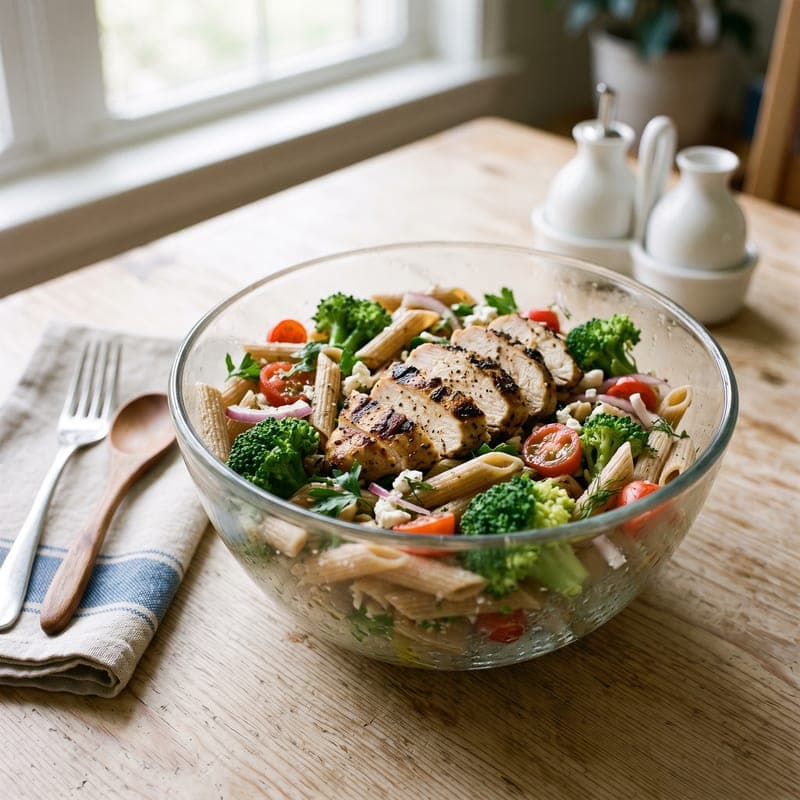
- Cold pasta salad with chicken. Built to be eaten cold rather than tolerated cold, so it needs no microwave at all.
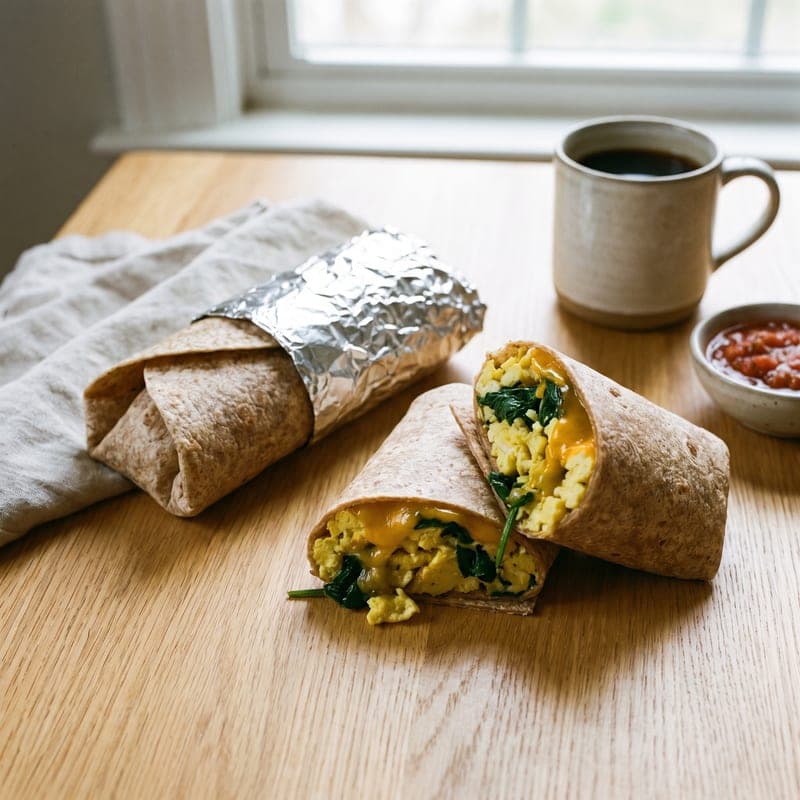
- Egg and cheese burritos. Wrap four, freeze three, and a frozen one is its own ice pack.
- Pasta with chicken and broccoli, which is also good cold.
Five minutes in the morning
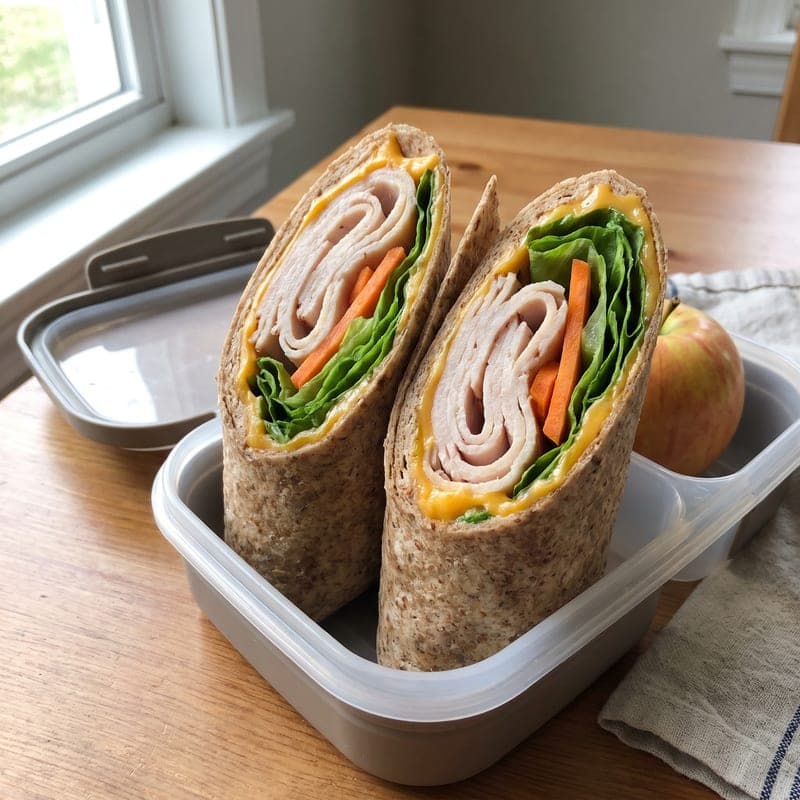
- Turkey and cheese whole-grain wrap, cut on a hard diagonal so it stands up and shows the filling.
- Chicken quesadilla, cut cold into strips.
- Turkey sub, wrapped tight in foil.
Match day, when the stomach matters
- Match-day hibachi bowl, the same favourite meal with less oil and more rice.
- Plain chicken and rice, deliberately boring, for a nervous stomach.
The Sunday hour that covers the week
The single change that makes packed lunches sustainable is doing them once rather than five times. One cook session on Sunday, boxes filled straight away, and weekday mornings become lifting a box out of the fridge.
Two rules make it work. Cool everything completely before the lid goes on, because warm food under a lid steams itself and by Tuesday the rice is gluey. And keep the wet things separate: sauce in a cup, dressing in a packet, fruit in its own compartment.
Recipes worth batching are marked Preps ahead on the recipe list, with how many meals one session yields and how long it keeps.
Recipes that fit
All recipes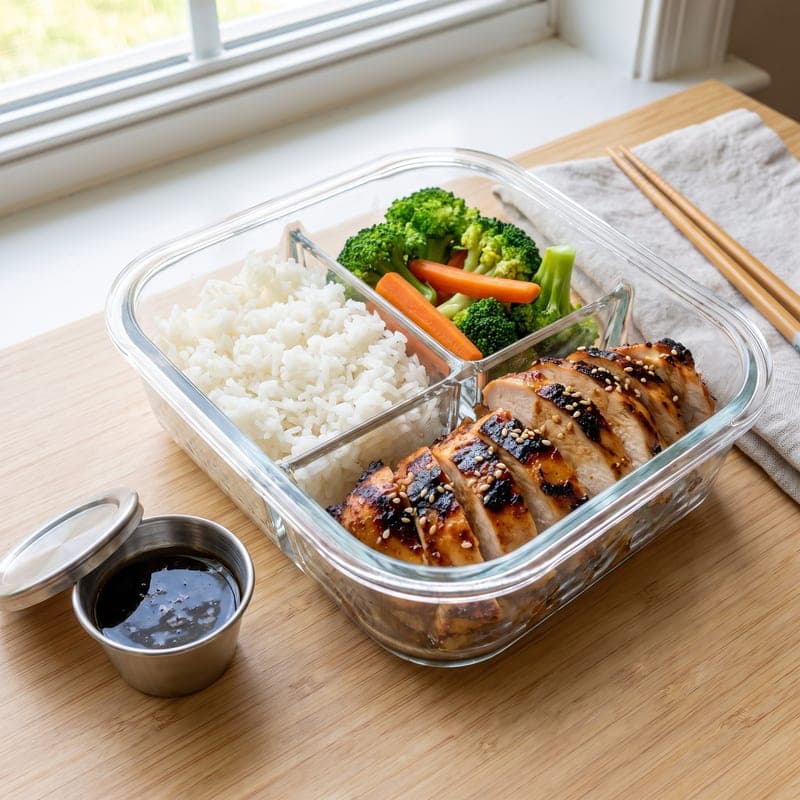
Frequently asked questions
Most do not, and it matters less than it seems. The cold pasta salad, the wraps, the quesadilla strips and the hibachi rice bowls are all good cold. Cold hibachi rice is genuinely good, which is more than can be said for most reheated lunches.
Keep reading
The After School Snack Before Practice
The 3:30 to 5:00 problem: what a young athlete should eat between school and practice, including options that survive a hot car and get eaten in the back seat.
Read guide
What to Pack for a Soccer Tournament: The Cooler List
A cooler and bag list for a youth soccer tournament weekend: what to pack, what survives the heat, what to eat between games, and what to skip.
Read guide
Sources
- [USDA-FoodData]U.S. Department of Agriculture, Agricultural Research Service. FoodData Central. USDA, 2024.
- [AAP-Sports-Nutrition]American Academy of Pediatrics, Committee on Nutrition and Council on Sports Medicine and Fitness. Sports Drinks and Energy Drinks for Children and Adolescents: Are They Appropriate?. Pediatrics, 2011.
- [AAP-Bright-Futures]American Academy of Pediatrics. Bright Futures Nutrition (3rd ed.): Sports Nutrition. AAP, 2020.
- [ACSM-2016]Thomas DT, Erdman KA, Burke LM. American College of Sports Medicine Joint Position Statement: Nutrition and Athletic Performance. Medicine & Science in Sports & Exercise, 2016.
FuelMyAthlete provides general guidance based on published sources from the American Academy of Pediatrics (AAP), National Athletic Trainers' Association (NATA), and American College of Sports Medicine (ACSM). This is not medical advice. For personalized sports nutrition plans, especially for children, consult a registered sports dietitian or pediatrician. See our editorial methodology.